
Clacton on Sea Buffer Stop Replacement
Challenge
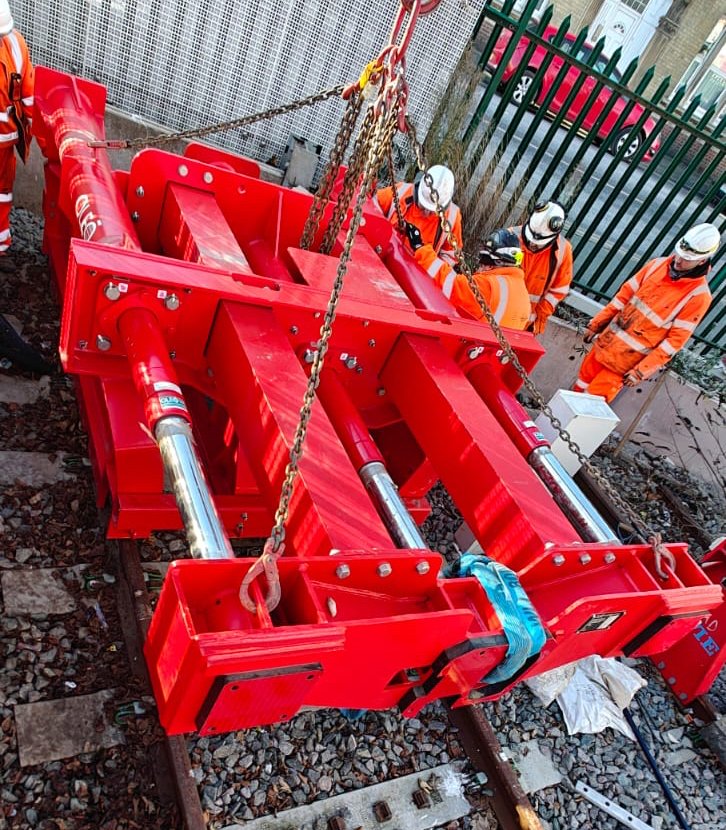
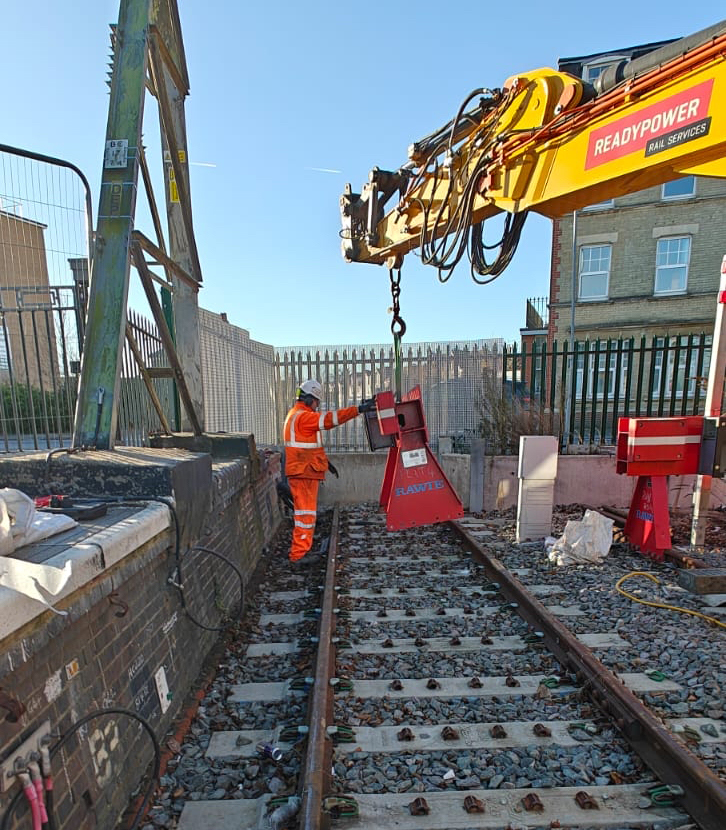
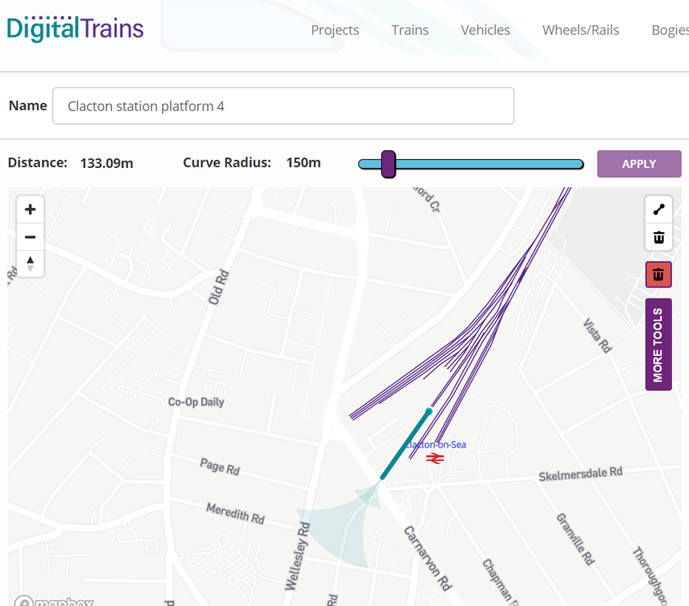
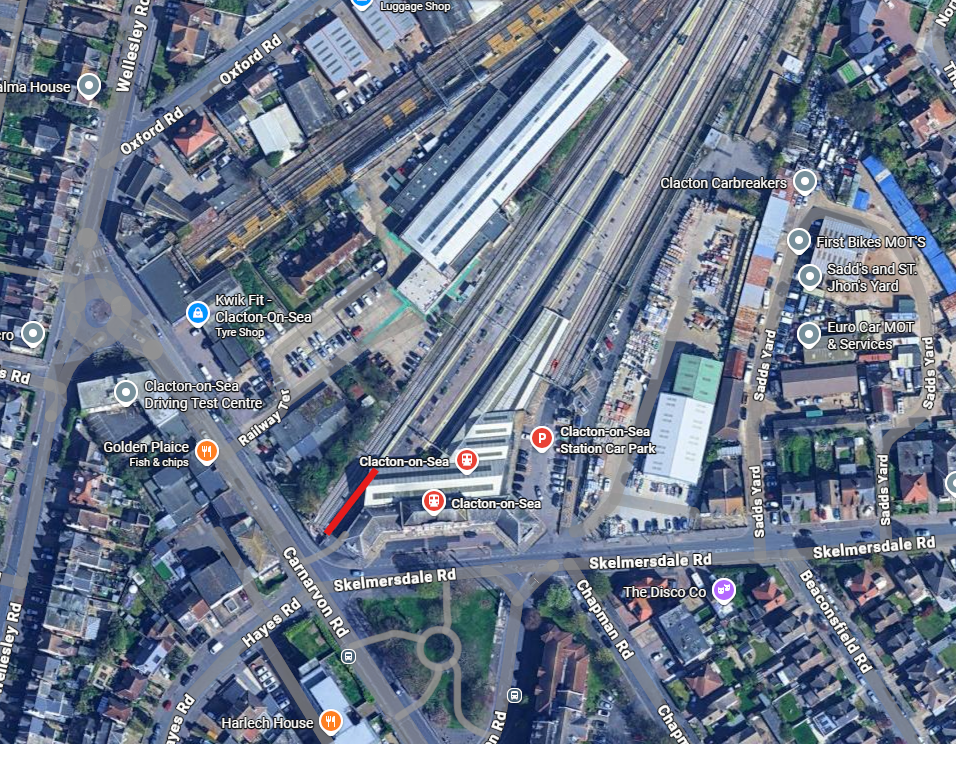
Oleo were approached by Network Rail to design a bespoke hydraulic Buffer Stop for Platform 4 at Clacton-on-Sea Station. The standard approved friction buffer stop requires in excess of 8m installation space whereas the total available installation length was restricted to just 4.5m.
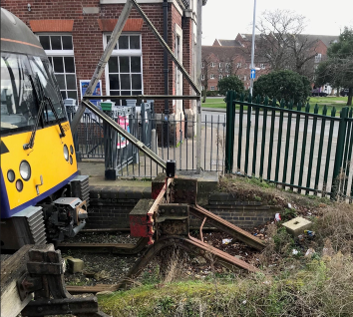
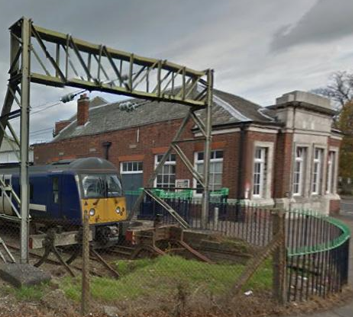
Installing the friction buffer stop solution would have required substantial infrastructure works, including extending the track onto land not owned by Network Rail and re-routing a public
road.
The Buffer Stop was required to absorb all kinetic energy from a 10 km/h impact involving a Class 720 train comprising 10 cars with a total mass of 501.80 MT, ensuring the train could be brought to a controlled stop and prevented from overrunning the available installation length of 4500 mm.
Approach
Oleo developed a Buffer Stop based on the client’s requirements and in order to assess the crash performance of the proposed Hydraulic Buffer Stop, performed detailed train impact
simulations.
DigitalTrains™ simulation software was used to analyse the response of the Class 720 train impacting the Oleo Buffer Stop, which is a Fixed Hydraulic solution fitted with 3 X Type 712
hydraulic buffers.
DigitalTrains™ is designed to simulate collisions involving trains consisting of rakes of rail vehicles into other trains or buffer stops.
The simulations were run using 100% effective mass. OIeo presumed the total vehicle mass to be split equally across the 10 vehicles.
The advanced simulations considered the complete Crash Energy Management (CEM) system taking into account the energy that would be absorbed by the Rolling Stock Coupler
and Anti Climber systems.
These CEM devices have been built into the DigitalTrains™ digital twin simulation model.
Conclusion
Oleos’ specified Buffer Stop fits within the available track space of 4.5m highlighting the ability to absorb impact energies within significantly shorter distances than other available solutions.
The simulations performed confirmed that the Buffer Stop successfully dissipated all energy upon a 10km/h impact with the 10 Car, Class 720 train (mass 501.80 MT). This was achieved with no damage to the Buffer Stop or to the Vehicle Body.
Minimal civil work was required, installation of extra central rails to manage higher forces were installed but Network Rail did not need to re-route the road to
enable them to extend the track saving time and money.
The calculations showed no concerns in regards to track uplift forces. This is considering the maximum predicted longitudinal forces applied to the Buffer Stop during this impact.
Typically a driver tries to maintain 5m offset from the buffer stop face to the front of the rolling stock. When there is just a 2m offset, the risk increases that the driver will overrun slightly and ‘nudge’ the buffer stop.
With the Oleo fixed Buffer Stop, impact energies are fully absorbed and the buffers reset automatically. In contrast, a friction device can be gradually pushed along the track if minor impacts go unreported. Because a high force is required to move a friction buffer stop, there is also an increased risk of coupler damage. All of this can be validated through simulation
using DigitalTrains™.